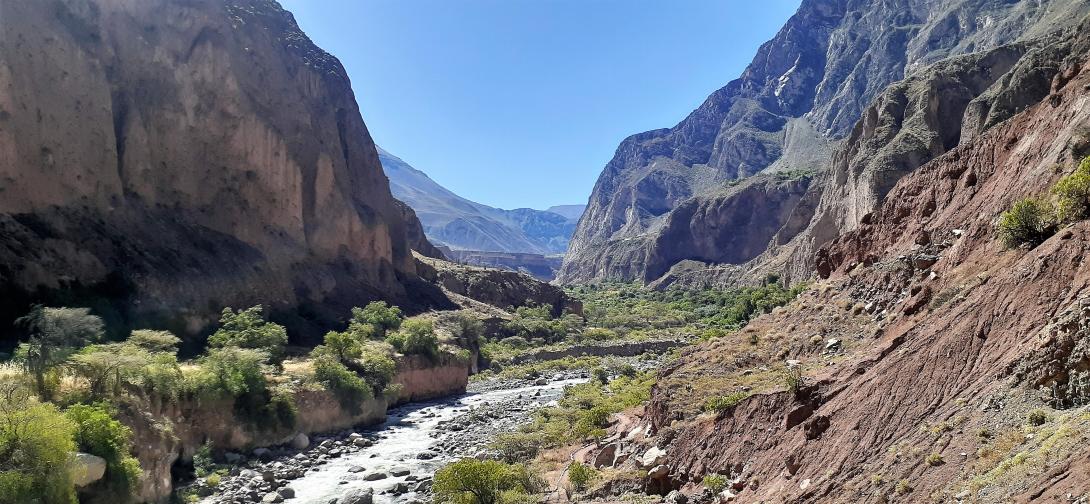
Many of us will have heard of the Colca Canyon, with its condor viewing experience that draws tourists from all over the world (well, that's assuming you don't have a pandemic happening, or nationwide rioting for that matter). But to the north there is another canyon -- much deeper, wider, but less well-known: the Cotahuasi Canyon.
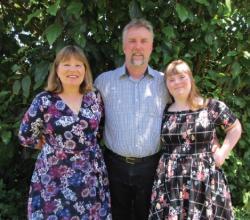
SIM workers Brad and Gina Shaw have been living in the Cotahuasi Canyon for over 20 years, helping establish the church, setting up a radio station, providing health care, and much more besides. Most recently the Shaws and the Cotahuasi church have been hosting a Bible translation team from the Quechua mission AIDIA, who are working on translating the Bible into the 'La Union' Quechua dialect.
Last week we spent ten days in Cotahuasi, with Mike teaching the Bible overview course, Kerry helping out Gina with the huge amount of hospitality the Shaws provide, and us accompanying Brad on a couple of radio 'reconnaissance' trips to different villages in the canyon. We also took a couple of days off to visit some hot springs and the awesome Sipia waterfall.
Below: Bible overview course in full swing.

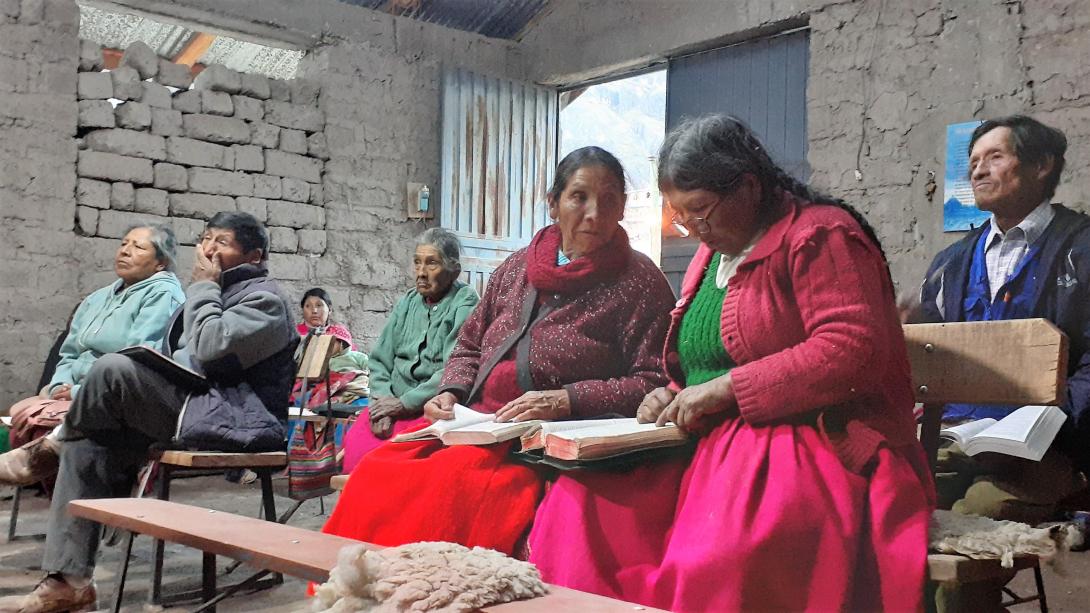
Above: a couple of ladies having a 'Berean moment' (see Acts 17:11) in the IEP church in Huillac, Cotahuasi Canyon.
It is about an 8-hour drive to get to the Cotahuasi Canyon. This takes you across the 4500m altiplano until you come to the rim of the canyon, which is about 2 miles deep. (The Grand Canyon, by comparison, is a mere 1 mile deep.) Within the canyon it's another climate: relatively warm, there are trees in abundance, farms, livestock, flowing water. But up on the rim and across the altiplano it's cold, dry, icy, minimal vegetation (if not just bare dirt), and the air is thin. The canyon and the surrounding altiplano feel like completely different worlds.
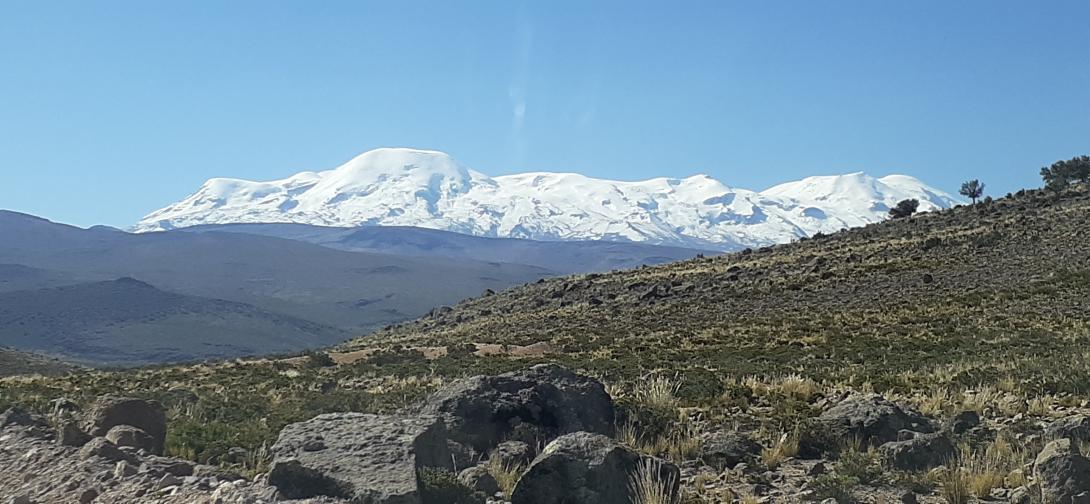
Below: Coropuna, 2nd-highest mountain in Peru (6377m). From Arequipa you have to drive around the western side of Coropuna to get to Cotahuasi. As you drive around the mountain, you get to see some of the glaciers that are coming off its flanks.

Above: Brad (l) and Fredy (r) helping a local get his radio reception sorted in the village of Cochapampa.
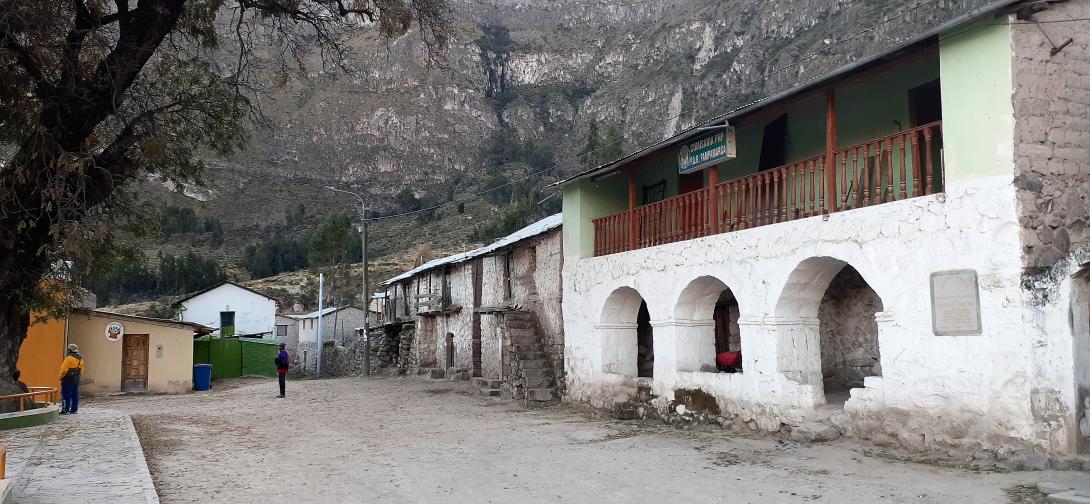
Below: Police station, Pampamarca.
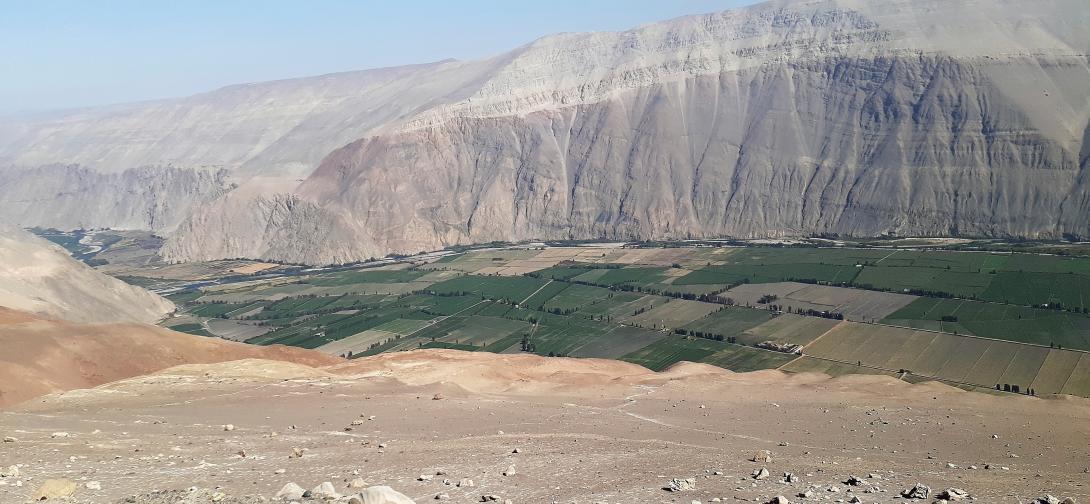
Above: Majes valley. There are many river valleys like this along the Pacific coast of Peru. These areas rarely get any rainfall, but they do have permanent rivers that come down from the Andes. Rice, wheat, oats, corn, peppers -- a whole variety of crops are harvested. Human habitation of these valleys goes back a long way; many have areas where you can find petroglyphs (carvings on rock surfaces) and hunter-gatherer stone tools.
Below: church lunch after the Sunday service, Cotahuasi. The ladies had got together the night before and peeled a mountain of potatoes, cut up about 10 chickens, and had everything cooking while the service was underway.